
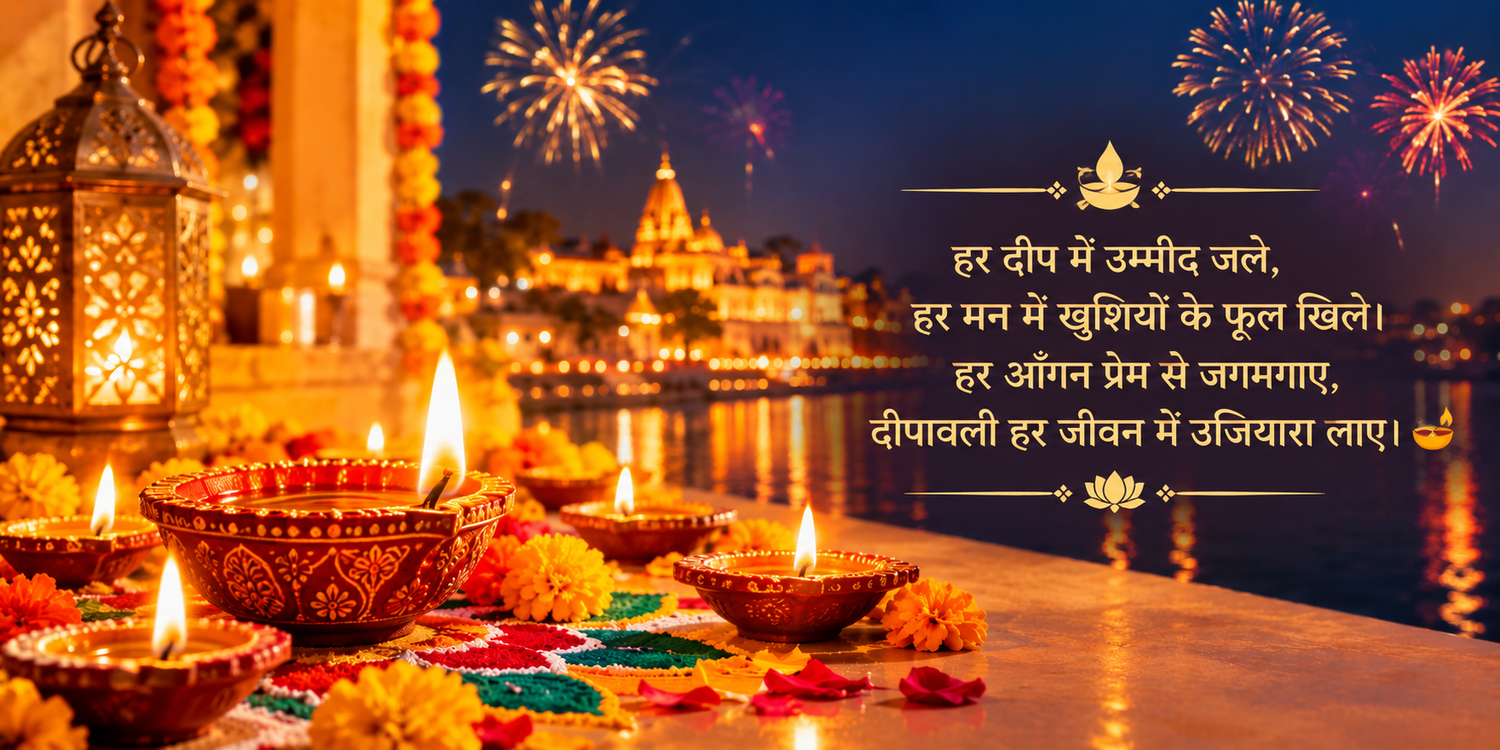
Diwali 2026: Dates, Legends & 5-Day Festival Guide
When is Diwali 2026? Date & Five-Day Festival Calendar
| Festival Day | Dates (As per Panchang) |
|---|---|
| Dhanteras | 6th November |
| Choti Diwali or Naraka Chaturdashi | 7th November |
| Diwali | 8th November |
| Gujarati New Year | 9th November |
| Govardhan Puja | 10th November |
| Bhai Dooj | 10th November |
Why is Diwali Celebrated? Legends Behind Diwali Festival
Every region of India celebrates Diwali with its own significance and story.
Diwali in North India: Lord Rama's Return to Ayodhya
In honour of Lord Rama's return, as per legend, it's believed that after defeating the demon Ravana, Lord Rama, Goddess Sita, Lakshman and others moved towards Ayodhya.
People consider the day of Diwali to be when Lord Rama returned to Ayodhya and finished his 14th year of Vanvaas (exile). It was Amavasya, so people of Ayodhya lit diyas to light up Ayodhya and guide Lord Rama's path in darkness.
Diwali in the Southern Part of India: Naraka Chaturdashi Celebration
In South India, they celebrate Naraka Chaturdashi to mark the victory of Lord Krishna and Satyabhama over the demon Narakasura; in Treta Yuga, the demon king Narakasura terrorised and looted divine items from the gods and also imprisoned 16,000 princesses. Lord Krishna and his wife Satyabhama defeated the demon Narakasura. South India celebrates 'Naraka Chaturdashi', the day before Diwali, which is also known as Choti Diwali.
Diwali in the Western Part of India: New Year of Gujarati
In Gujarat and part of Maharashtra, Diwali celebrations are related to the story of Lord Vamana. According to the Puranas, Lord Vishnu took the avatar (form) of Vamana, as demon king Bali (Mahabali) was a powerful ruler and gained control over the three realms (heaven, earth, and Patal). To balance the universe, Lord Vishnu, in the form of Vamana, asked for three paces of land. King Bali agreed and granted his wish; then Vamana covered earth and heaven in two steps.
Then King Bali offered to put Lord Vishnu's foot on his head; seeing Bali's devotion, Vamana placed his third step on Bali's head, sending him to rule the Patal. This is known as the Bali Pratipada festival.
The Gujarati community celebrates this day as 'Bestu Varsh' (New Year), which falls after the day of Diwali, as it is the start of the new Vikram Samvat (Hindu calendar).
Diwali in the Eastern Part of India: Kali Puja & Ancestors Worshipped
Across India, people celebrate Diwali in honour of one or another form of Lord Vishnu; but West Bengal and Assam dedicate these days to Goddess Kali and honour ancestors. Legend says Goddess Kali took a terrifying form to destroy demons who tried to imbalance the universe; worshipping the Goddess on this Amavasya (no-moon night) symbolises the destruction of ego and evil forces.
They also guide their ancestors' souls through light and lamps to illuminate the path for ancestral souls.
Now you know why Diwali is a major and most significant festival in India. Every part of India has a different way and different story to celebrate Diwali, but the core essence is the same: victory of good over evil.
Diwali Celebration in Jain & Sikh Community
Diwali time is not just auspicious for Hindus but for other religions also, as:
- The Jain community celebrates Lord Mahavira's attainment of Moksha (nirvana) on this day.
- The Sikh community celebrates Bandi Chhor Divas; it is one of the major festivals for Sikhs. It is the day of Guru Hargobind Ji's release from Mughal imprisonment, who was accused wrongly; this day symbolises freedom and justice, as the victory of light over darkness.
5-Day Diwali Celebrations in India
5-Day Diwali Celebration in North India
In North India, Diwali is celebrated over five days, and each day has its own ritual and meaning.
Dhanteras — This day falls on 'Aaso Vad Teras', and this year it will be celebrated on 6th November. On Lakshmi Puja day, families pray to Goddess Lakshmi and Lord Ganesha, seeking their blessings for prosperity and wisdom. Homes are lit with diyas in the evening, and most people buy gold jewellery on Dhanteras, as it is considered auspicious for wealth and a good beginning.
Choti Diwali — The day before Diwali is considered Choti Diwali; it falls on 7th November, and Choti Diwali is the day of final preparations; homes are decorated and lit with diyas, and many families also burst a few early crackers, building up the festival excitement before Diwali.
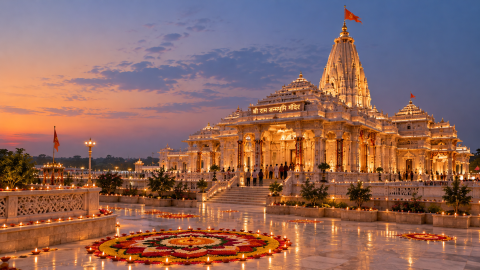
Diwali — Diwali is celebrated on 'Aso Amavasya'; this Diwali falls on 8th November. On the main day, people perform puja, light diyas, decorate rangoli and burst fireworks, which is also known as 'Aatishbazi'. North India celebrates Diwali in honour of Lord Rama, who is believed to have returned to Ayodhya after his 14-year exile. Learn more about how Ayodhya celebrates Diwali and how significant it is to witness diyas being lit on the ghats of the Saryu River.
Govardhan Puja — The day after Diwali is celebrated as Govardhan Puja, which falls on 10th November. North India, especially Uttar Pradesh, celebrates 'Govardhan Puja', also known as the 'Annkut' festival, remembering how Lord Krishna lifted the Govardhan Hill to protect villagers from Indra's anger. They perform havan and give offerings to Govardhan Hill as it provides food and shelter to people. Learn more about why Govardhan Puja is performed and what Lord Krishna's story related to Govardhan Parvat is.
Bhai Dooj — Bhai Dooj falls on 10th November. Bhai Dooj marks the bond between siblings; sisters apply tilak on their brothers' foreheads and pray for their well-being, while brothers give gifts in return. It closes the five-day celebration on a warm, family note.
Diwali Celebration in South India
Dhanteras — Just like in the North, in South India, Dhanteras is also marked by buying gold and silver, considered auspicious for inviting prosperity into the home.
Naraka Chaturdashi — In the southern part of India, the main celebration happens on the day before Diwali; the day is known as 'Naraka Chaturdashi'. Families wake up early for Ganga Snanam, a ritual oil bath believed to cleanse the body and soul, followed by wearing new clothes and bursting firecrackers. The day marks Lord Krishna's victory over the demon Narakasura. Homes are decorated with kolam (rangoli) at the doorstep.
Diwali — While the main festival celebration happens a day earlier, this day is still observed with prayers, visits to temples, and spending time with family.
Yama Dwitiya — The fifth day of Diwali is Bhai Dooj, but in the South, this day is celebrated differently; the fifth day of Diwali is known as 'Yama Dwitiya'. The story relates to the legend of Yama (god of death) visiting his sister Yamuna on this day.
5-Day Diwali Celebration in Gujarat
Dhanteras — In Gujarat, on the day of Dhanteras, people pray to Goddess Lakshmi and do Lakshmipujan at home.
Kaali Chaudas — As the rest of India celebrates Choti Diwali and Naraka Chaturdashi, Gujaratis dedicate this day to Lord Hanuman and ancestors; they make vada (fried snacks) as an offering to Lord Hanuman, then put a few vadas in the middle of the road. This ritual is believed to take away the negativity and darkness of the home.
Diwali — On this day, the Gujarati, and especially Gujarati businessmen, community does 'Chopadapujan' at offices and shops. In the evening, people light diyas, make rangolis, and burst firecrackers.
New Year — For Gujaratis, this day marks the start of the new year, which falls at the start of the Kartik month, as Gujarat follows the Vikram Samvat calendar. In Gujarat, it is called 'Bestu Varsh'. On these days, the younger ones take blessings from elders, and elders give blessings and money to the younger ones.
Bhai Dooj — In Gujarat, the sister invites her brother for a meal and does a tilak ritual; then the brother gives a gift to the sister.
Diwali Celebration in East India
In East India, especially in West Bengal and Assam, the spotlight shifts from Lakshmi to Kali Puja, also called Shyama Puja. Bengalis worship Goddess Kali on the day of Diwali. They offer flowers, decorate the home with lamps, and offer night-long prayers.
Odisha has its own distinct rituals called Kauriya Kathi, honouring ancestors by lighting jute sticks and small crackers, and guiding their souls back home.
Dhanteras, Choti Diwali, and Bhai Dooj are also celebrated here, though with less emphasis than in the rest of India. Here, Bhai Dooj is known as 'Bhai Phonta', where sisters apply a tilak and tie a strand of grass (dub) for long life, and celebrate with sweets, followed by a family gathering.
Diwali 2026: Lakshmi Puja Mahurat in Different Parts of India
Lakshmi Puja on Diwali 2026 is performed during Pradosh Kaal, which begins 45 minutes after sunset; the mahurat is considered the most auspicious time to invoke Goddess Lakshmi.
| City | Lakshmi Puja Mahurat Timings |
|---|---|
| Delhi | 5:54 PM - 7:50 PM |
| Mumbai | 6:27 PM - 8:27 PM |
| Kolkata | 5:20 PM - 7:18 PM |
| Bengaluru | 6:17 PM - 8:20 PM |
| Chennai | 6:07 PM - 8:08 PM |
| Ahmedabad | 6:22 PM - 8:20 PM |
| Pune | 6:24 PM - 8:24 PM |
From Ayodhya's glowing ghats to Bengal's Kali Puja nights, from Gujarat's new year to South India's Naraka Chaturdashi, Diwali proves that one festival can mean a different thing; rituals can be different, ways of celebration can be different, but they still carry the same heart: light over darkness, hope over despair, togetherness over distance. However you celebrate it, may this Diwali bring you prosperity, wellness and brighten your life like Diwali lights.
FAQs
Diwali follows the Hindu lunar calendar, so the date shifts each year rather than falling on a fixed day.
Govardhan Puja falls the day after Diwali, but this year some Panchangs place it on 9 November and others on 10 November, due to how the tithi timing lines up. Check your regional Panchang for the exact date.
Gujarati New Year is celebrated the day after Diwali, same as Govardhan Puja, so it also falls on either 9 or 10 November 2026, depending on the Panchang followed.
Diwali falls on the day of Amavasya, and celebration of victory over evil cannot be done in darkness, so people place rows of diyas in homes, temples and community places, symbolising the victory of light over darkness and good over evil.
While the core theme of light over darkness stays the same, the legends and rituals vary by region: Lord Rama's return in the North, Krishna's victory over Narakasura in the South, the New Year in Gujarat and Kali Puja in the East.
Yes, Jains mark Lord Mahavira's attainment of moksha on this day, and Sikhs celebrate Bandi Chhor Divas, as Guru Hargobind Ji was released from imprisonment, marking the victory of justice.
The five days are Dhanteras, Choti Diwali (Naraka Chaturdashi), Diwali (Lakshmi Puja), Govardhan Puja, and Bhai Dooj.
Gold and silver jewellery, as it represents Goddess Lakshmi; also, buying new utensils is equally auspicious.
Buying gold and silver on Dhanteras is considered auspicious, as it's believed to invite wealth and prosperity into the home for the year ahead.
Naraka Chaturdashi is the day when Lord Krishna and Satyabhama gained victory over the demon Narakasura, who had imprisoned thousands of women.
In North India, Goddess Lakshmi and Lord Rama are worshipped. In South India, Lord Krishna and his wife Satyabhama. In Gujarat, Goddess Lakshmi, Lord Ganesha and Lord Kuber (god of wealth). In East India, specifically in West Bengal and Assam, Goddess Kali is worshipped on Diwali.
As per the Hindu Panchang, one month before Diwali, Shraddh Paksh (Pitru Paksh) begins; it is believed ancestors visit, and Diwali is the time when they return, but due to the no-moon night, people light jute sticks to show them a path; nowadays, the whole of India also bursts crackers.
0 Comments
Leave a Comment